Steve Jurvetson, on Rose’s Law for quantum computers: 
If you are a nerd and you’re not following Steve Jurvetson on Flickr, you should correct that. Why? Posts like this one, in which the VC and tech-thinker explores interesting things in interesting ways. “Barring a fracture of physics, we may be able to build quantum computers more powerful than the entire universe within 3 years. They harness the refractive echoes of many trillions of parallel universes to perform a computation, unlike anything we have seen before.” Check out the full post, with annotations and more thoughts.
Author Archives: Egg Syntax
The music of the primes
Little-scale offers music procedurally-generated from prime numbers. A “full version”, available for download, is 26 hours long. [Little-Scale]
Optical Drive to SSD Upgrade
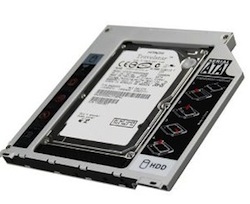
Replacing my laptop’s optical drive with a Solid State Disk (SSD) was one of the best decisions I’ve made in the past year. I have an aging early-2008 Macbook Pro. I say aging because the computer itself is in great condition, and while it is suitable for 90% of what I do on a daily basis, I found that when editing photos in Lightroom or when working in Photoshop or anything video related it would slow to a crawl. The first thing I upgraded was the RAM which I doubled from 4 to 8 GB (which I recommend to everyone with an aging computer), but it still left me feeling I could do more.
So six months ago I decided that the price of SSDs had fallen enough to warrant upgrading the hard drive in my computer. When I first started researching the process, I stumbled across a few people who had decided to replace their optical drive with an SSD drive that fits into a specially designed caddy. I realized I could count on one hand the number of times I had used my optical drive in the previous year, and even then it was most often to burn a DVD; something which has, for the most part, been replaced by cheap USB flash drives.
So I made the decision to ditch my optical drive, and replace it with a 128 GB Sandisk SSD and a specially made SSD caddy which screws into the optical drive’s slot. Overall the installation took about an hour of careful disassembly and reassembly. As far as tools, I used the previously reviewed iFixit 54-piece kit. After installation I was left with a naked optical drive which, as it happens, functions perfectly when used with the previously reviewed SATA/IDE to USB adapter. Now when I absolutely need to use the optical drive, I have one available. I decided not to pick up a case for the optical drive given that I rarely use it but they are available from One World Computing for about $40.
Installing an SSD was only the first step in the process, however. The really important part was installing all of my critical software and most frequently used files onto the new disk. To net the biggest bump in speed it helps to perform a clean install of whatever OS you’re using directly to the SSD. I noticed gains immediately as my computer started up in under 30-seconds compared to two minutes before. After install the whole system was incredibly responsive, and programs that used to bounce up and down in the dock for thirty seconds or more opened with a new found urgency. I really hadn’t expected the difference to be as significant, but I can safely say that booting with and using an SSD feels like using a brand new computer. Outside of the immediate gains in speed, SSDs also use less power when compared to their spinning brethren. Since my most frequently used programs were loading from the SSD I saw around a 30-40% increase in battery life (around an hour and a half depending on use).
Overall, the upgrade cost me around $150, and in return I netted what feels like a much much newer computer. I also have the benefit of redundancy in the form of two hard drives, which means that I have an on-the-go backup solution (I have since upgraded my original 250 GB HDD with a faster 1 TB HDD). And it only gets better as I have seen increasing gains as operating systems are optimized for SSDs (in the case of the newest version of OSX).
— Oliver Hulland
[Note: It’s impossible to keep up with the constant fluctuation of pricing for SSDs so always keep a look out for deals
(for example, the price of the drive I used has fallen $68 in the six months since installation). In addition, I have heard positive things about OWC’s Data Doubler which is a more convenient, albeit more expensive, package alternative to the DIY SSD replacement mentioned above. –OH]
Unibody MacBook Hard Drive Caddy Tray
$11
Available from Amazon
Manufactured by Brain Trade
Crucial M4 128 GB SSD
$99
Available from Amazon
Manufactured by Crucial
Note: If you know of something similar for non-Apple products, please let us know and we will update the review.–OH
#876; How to Lie

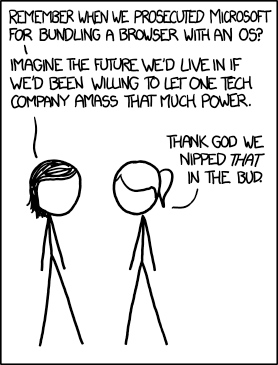
Microsoft
Just how hard is it to make a living as an indie musician?
Grizzly Bear: Indie-Rock Royalty of 2012 — Vulture
http://www.vulture.com/2012/09/grizzly-bear-shields.html
(via Instapaper)
October 07, 2012

WOOP!
Article: The Extremely Personal Computer: The Digital Future of Mental Health – Gabriella Rosen Kellerman – The Atlantic
The Extremely Personal Computer: The Digital Future of Mental Health – Gabriella Rosen Kellerman – The Atlantic
http://www.theatlantic.com/health/archive/2012/10/the-extremely-personal-computer-the-digital-future-of-mental-health/263183/
(via Instapaper)
Article: The Plot Against Occupy | Culture News | Rolling Stone
The Plot Against Occupy | Culture News | Rolling Stone
http://www.rollingstone.com/culture/news/the-plot-against-occupy-20120926
(via Instapaper)
Portraits Drawn with Tea, Vodka, Whiskey and Ink by Carne Griffiths
Portraits Drawn with Tea, Vodka, Whiskey and Ink by Carne Griffiths: 


UK-based illustrator Carne Griffiths creates these striking portraits with uncommon mediums such as tea brandy, vodka, whiskey, graphite and calligraphy ink. His drawings most frequently explore human and floral forms, as says he’s “fascinated by the flow of line and the ‘invisible lines’ that connect us to the natural world.” The four pieces above are part of a limited edition postcard set just released by Griffiths, each of which comes in a fancy custom-illustrated, wax-sealed envelope. He also has a solo show at Ink-d Gallery in Brighton that closes this Saturday. (via behance)