London police crowdsource the panopticon

London police crowdsource the panopticon:
London’s Metropolitan Police have produced an app called Facewatch ID that is billed as a crowdsourcing tool for identifying suspects shown in stills from CCTV footage of last summer’s riots. But the 2,800 riot images also include “a further 2,000 images of people wanted by the police for offences not connected to the riots.” From the BBC:

Assistant commissioner Mark Rowley, head of specialist crime and operations at Scotland Yard, said: “This is a great opportunity for the public to help us fight crime and bring those who remain outstanding to justice.

“My hope is that the two-thirds of Londoners who own smartphones will download this app, and help us identify people we still need to speak to.

“We need Londoners to browse through the app every week or so as new images will appear regularly. This is a fantastic way for Londoners to help us to fight crime.”

Crowd-sourcing used to trace London riot suspects

(via Making Light)


The Soviet synthesizer that bridged occultism and electronic music

The Soviet synthesizer that bridged occultism and electronic music:

You don’t play the ANS synthesizer with a keyboard. Instead you etch images onto glass sheets covered in black putty and feed them into a machine that shines light through the etchings, trigging a wide range of tones. Etchings made low on the sheets make low tones. High etchings make high tones. The sound is generated in real-time and the tempo depends on how fast you insert the sheets.

This isn’t a new Dorkbot or Maker Faire oddity. It’s a nearly forgotten Russian synthesizer designed by Evgeny Murzin in 1938. The synth was named after and dedicated to the Russian experimental composer and occultist Alexander Nikolayevich Scriabin (1872–1915). The name might not mean much to you, but it illuminates a long running connection between electronic music and the occult.

You can find traces of the occult throughout the history of electronic music. The occult obsessed Italian Futurist Luigi Russolo built his own mechanical instruments around 1917. The famous Moog synthesizer made an early appearance in Mick Jagger’s soundtrack to Kenneth Anger’s occult film Invocation of My Demon Brother in 1969. And in the late 1970s Throbbing Gristle built their own electronic instruments for their occult sound experiments, setting the stage for many of the occult themed industrial bands who followed. The witch house genre keeps this tradition alive today.

It’s little the surprise otherworldly sounds and limitless possibilities of synthesizers and samplers would evoke the luminous. But there’s more to the connection. The aim of the alchemist is not just the literal synthesis of chemicals, but also synthesis in the Hegelian sense: the combination of ideas. Solve et Coagula. From the Hermetic magi of antiquity, to Aleister Crowley’s OTO to modern chaos magicians, western occultists have sought to combine traditions and customs into a single universal system of thought and practice.

Electronic music grew from similar intellectual ground, and it all started with Scriabin.

Scriabin’s Synthesis

Scriabin is remembered by classical music scholars for his pioneering work in atonality and multimedia. As almost all of Scriabin’s biographers note, he was deeply influenced by Theosophic Society co-founder Madame Blavatsky‘s highly syncretic form of occult thought, and Theosophy informed some of his most famous works.

In his final symphony, Prometheus: Poem of Fire, Scriabin used tool he built himself, called the “tastiera per luce” to project colors in sync with the music. He used tables of correspondence from Theosophy that associated different colors and tones with different planes of reality, such as spirituality and reason. Scriabin’s obsession with associating colors with particular tones lead to suggestions that he had synesthesia. But after Prometheus, he abandoned Theosophy’s tables of correspondence and created his own, leading scholars B. M. Galeyev and I. L. Vanechkina to conclude that Scriabin did not actually have the condition. Yet a drive to synthesize aspects of the occult with sound, light and other senses into a single art form remained.

Scriabin synthesized his own indiosyncratic form of mysticism influenced by Theosophy, the Russian Symbolist movement and thinkers like Friedrich Hegel (the granddaddy of synthesis), Konstantin Bal’mont, Prince Evgenii Trubetskoy and Vladimir Solovyov, according to a paper by Emanuel E. Garcia. This line of occult thinking inspired his unfinished magnum opus Mysterium.

Mysterium was to be what today we’d call a multimedia arts festival. Here’s how John Bell Young described the would-be event:

Scriabin’s dream was to stage the Mysterium in the Himalaya. He conceived it as a grand purification ritual where bells were to be suspended from clouds. Thousands of participants, clad in white robes, would intone his melismatic mantras with the fervor of the dervishes, expending every bit of their available energy in the service of his artistic idealism. He envisioned an orgy of the senses, and to this end created a choreography of lights, odors, colors and exotic dances. This was to have gone on for a week, leading to the apocalypse and the end of time. Thus transcended, the physical world, and ego itself would dematerialize; man would be reborn as pure concept. He even went as far as to purchase a plot of land in the Himalaya, fully expecting to realize this magniloquent event.

The apocalyptic vision seems to be plucked right from Blavatsky’s The Secret Doctrine, which predicted that modern humans would be replaced by a more evolved race.

Synthesis in Italian and Russian Futurism

Both Scriabin and Theosophy were significant influences on the Italian Futurist movement, particularly Futurist Manifesto author Filippo Marinetti and “Art of Noises” author and electronic music pioneer Luigi Russolo, according to Luigi Russolo, Futurist: Noise, Visual Arts, and the Occult by Luciano Chessa. The Futurists’ ambitions to unite art, science and politics echoed the Theosophical Society’s efforts to synthesize science and spirituality.

The Russian avant garde, broadly referred to as “Futurists,” adopted ambitious endeavors of synthesis as seen in Andrey Smirnov and Liubov Pchelkina’s paper “Russian Pioneers of Sound Art in the 1920s.” And while the Italian Futurists aligned with the Fascists (Marinetti went on to co-author the Fascist Manifesto, which differed greatly from fascism in practice), the Russian avant garde aligned with Marxism. Lunacharsky, the People’s Commissar of Enlightenment, told the composer Sergei Prokofiev “You are revolutionary in music as we are revolutionary in life – we should work together.” And of course Marx and Engel were, like Scriabin, influenced by Hegel. Marxists were no strangers to grand unification theories.

The Russian avant garde was far ahead of the West in the development of electronic instruments. Leon Theremin, inventor of the first mass produced electronic instrument, is the best remembered experimenter of this period. The Theremin synthesizes motion and sound the same way the ANS sythesizes images and sound. But his eponymous instrument was hardly Theremin’s only experiment. “Theremin worked on countless projects, striving to bring music, light, movement, smell and touch together in a single technology,” Smirnov and Pchelkina wrote. Scriabin would have been proud.

Some of Theremin’s peers went further in trying to synthesize art, engineering and politics. For example, artist and philosopher Solomon Nikritin’s theory “Projectionism” applied not just to art but to the creation of a whole new society. “Nikritin went so far as to attempt in 1924 to chart the process of evolution of consciousness and creative energy of society from simple, primitive states to the perfection of the future classless society,” Smirnov and Pchelkina wrote. If that sounds like Scriabin or Blavatsky, perhaps it’s because there’s an indirect influence of Theosophy on Nikritin’s Projectionism. Nikritin was influenced by Alexander Bogdanov’s theory of Tektology (a forerunner of cybernetics and systems theory), and Bogdanov was influenced by the mystic philisopher Vladamir Solovyov (see Stefan Rossbach’s Gnostic Wars and Charlotte Douglas’s essay “Energetic Abstraction” published in the book From Energy to Information).

The ANS

The political tides turned against the Russian avant garde by the time Murzin began working on the ANS in 1938. As Isobel Clouter explains in an episode of the BBC radio show The Soundhunter, most early sound art projects were destroyed. Engineers were forced to work on art projects in secret and had little access to parts. These conditions slowed down the development of the ANS. According to Stanislav Kreichi, Murzin’s assistent and only surviving operator of the ANS, Murzin didn’t have access to a lab in which to complete the ANS until 1958. The delayed completion may have saved it from the fate of the other avant garde sound art machines. Yet according to Smirnov and Pchelkina it was the last Russian sound art creation not based on Western prototypes. The future of electronic music would belong to Western and Japanese companies, not Russia.

The ANS went on to be used in the soundtrack for the Andrei Tarkovsky film Solaris in 1972, but today it sits in the basement of the Moscow State University, almost forgotten and seldom used. A few artists have recorded albums with it over the years, mostly notably the late occultists/electronic musicians Coil who traveled to Russia in 2002 to record their album ANS and the follow-up COILANS. Because, according to the liner notes, the band had only a three days to work with the machine, they opted to etch their own sigils onto sheets and convert these into sound rather than try to deliberately compose works.

Tomorrow

Today cheap computers and electronics components, along with open source technologies like the Arduino, Processing and PureData, have lead to a new renaissance in sound art. Dorkbot and Maker Faire provide venues for new sound and light experiments, like Christi Denton’s LAMOSO, which triggers sound using lasers.

Meanwhile, in a culture gripped by retromania the New Aesthetic movement is attempting to answer the question of “what’s next” in art and technology and taking a hard look at machines senses. Open source machine vision technology, machine learning algorithms and 3D printing all open new avenues to artist-engineer. There’s an opportunity for a new generation of cross-disciplinary synthesists to forge a new philosophy of everything by learning from history but shedding the superstitions and political dogma of the past.

References and Further Reading

Theremin Center: ANS by Stanislav Kreichi.

BBC Radio segment on the ANS and experimental electronic music of early 20th century Russia (This is a YouTube video, but it’s just audio).

The Soundtrack to the film Solaris, created with the ANS.

Jonathan Dean’s summary of the liner notes from COILANS.

Russian Pioneers of Sound Art in the 1920s by Andrey Smirnov and Liubov Pchelkina.

Scriabin: A Great Russian Tone Poet by Arthur Eaglefield Hull.

Scriabin’s Mysterium and the Birth of Genius by Emanuel E. Garcia, M.D.

Was Scriabin a Synaesthete? by B.Galeyev and I.Vanechkina.

Madame Blavatsky’s Baboon by Peter Washington.

Luigi Russolo, Futurist: Noise, Visual Arts, and the Occult by Luciano Chessa.

Gnostic Wars by Stefan Rossbach.

From Energy to Information: Representation in Science and Technology, Art, and Literature edited by Bruce Clarke (Editor)and Linda Henderson (Editor).

Another YouTube video of the ANS in action.

And another.

VIRTUAL ANS A Windows software synthesizer that attempts to emulate the ANS.


Fun search challenge

Wednesday search challenge (6/27/12): Do you have X-ray vision?:

Since so many people seemed to enjoy a difficult task, today I’m going to ask if you can develop X-ray vision with this image.
I took this picture while on a recent trip somewhere in the world.  The question for today is simple—look through the façade of this building and tell me….

Question:  What kind of trees are planted in the courtyard behind the entrance to this building?

Tomorrow I’ll reveal how I found the answer.  
For extra credit:  What date were trees of this kind first planted?   

As usual, please tell us HOW you found the answer and HOW LONG it took you to find it!  

Search on!

________
P.S.  Special announcement:  I’m really pleased to let everyone know that I’m teaching a special online “Power Searching with Google” class beginning on July 10th.  The class will be 6 classes long and featuring short videos, lots of examples and more search activities.  If you like this blog’s Search Challenge feature, you’ll probably enjoy the class.  


If you’d like, register at Power Searching With Google Registration.  Hope to see you online! 


Bruce Sterling on Alan Turing, gender, AI, and art criticism

Bruce Sterling on Alan Turing, gender, AI, and art criticism:
Bruce Sterling gave a speech at the North American Summer School in Logic, Language, and Information (NASSLLI) on the eve of the Alan Turing Centenary, and delivered a provocative, witty and important talk on the Turing Test, gender and machine intelligence, Turing’s life and death, and art criticism.


If you study his biography, the emotional vacuum in the guy’s life was quite frightening. His parents are absent on another continent, he’s in boarding schools, in academia, in the intelligence services, in the closet of the mid-20th-century gay life. Although Turing was a bright, physically strong guy capable of tremendous hard work, he never got much credit for his efforts during his lifetime.

How strange was Alan Turing? Was Alan Turing a weird, scary guy? Let’s try a thought experiment, because I’m a science fiction writer and we’re into those counterfactual approaches.

So let’s just suppose that Alan Turing is just the same personally: he’s a mathematician, an early computer scientist, a metaphysician, a war hero — but he’s German. He’s not British. Instead of being the Bletchley Park code breaker, he’s the German code maker. He’s Alan Turingstein, and he realizes the Enigma Machine has a flaw. So, he imagines, designs and builds a digital communication code system for the Nazis. He defeats the British code breakers. In fact, he’s so brilliant that he breaks some of the British codes instead. Therefore, the second World War lasts until the Americans drop their nuclear bomb on Europe.

I think you’ll agree this counter-history is plausible, because so many of Turing’s science problems were German — the famous “ending problem” of computability was German. The Goedel incompleteness theorem was German, or at least Austrian. The world’s first functional Turing-complete computer, the Konrad Zuse Z3, was operational in May 1941 and was supported by the Nazi government.

So then imagine Alan Turingstein, mathematics genius, computer pioneer, and Nazi code expert. After the war, he messes around in the German electronics industry in some inconclusive way, and then he commits suicide in some obscure morals scandal. What would we think of Alan Turingstein today, on his centenary? I doubt we’d be celebrating him, and secretly telling ourselves that we’re just like him.

Turing Centenary Speech (New Aesthetic)Turing Centenary Speech (New Aesthetic)

(Image: Tsar Bomba mushroom cloud, a Creative Commons Attribution Share-Alike (2.0) image from andyz’s photostream)


80 Teddy Ruxpins with robot voices tell you how the Internet feels

80 Teddy Ruxpins with robot voices tell you how the Internet feels:

Sean Hathaway stuck 80 Teddy Ruxpins on a gallery wall and hooked them up to a sentiment-analysis engine fed by a social media scraper. Snippets of emotional, throwaway text are turned into synthetic ruxpin-utterances, accompanied by emotional music:


TED is a large, wall-based installation consisting of an array of 80 Teddy Ruxpin dolls that speak emotional content gathered from the web via synthetic speech with animated mouths. The speaking of the emotional content is accompanied by one of twenty-four musical vignettes that have been paired to the emotional content being spoken. Each vignette, representing one of twenty-four subtle variants of human emotion, have been composed in such a way that the beginnings and ends of the short pieces will seamlessly dogleg in any possible configuration and stream endlessly as a unified whole. The installation is allowed to drift about freely through the emotional landscape being driven only by those who are contributing content to the piece whether unwittingly or consciously. As such the overall presentation of the piece can vary greatly based on external conditions such as seasons, world events and even time of day. The piece is essentially taking the instantaneous emotional pulse of the internet and this collective pulse, like a human pulse, varies over time.

T,E.D. (Transformations, Emotional Deconstruction)

(via Make)


Rebuttals to David Lowery’s indictment of "free culture" and its alleged murder of musicians

[This whole dialogue has been pretty interesting. I particularly recommend Travis Morrison’s article. -egg]

Rebuttals to David Lowery’s indictment of “free culture” and its alleged murder of musicians:
The Internet has been abuzz with Emily White, a intern at NPR, and her article about how she has never bought music and probably never will. and the response from David Lowery of Camper Van Beethoven and Cracker. Lowery’s response is a powerful piece of writing, and contains some valuable insights into what the old music industry did well, but it’s also a mess. He has some weird conspiracy theory that the “free culture” movement is funded by large tech companies as a stalking horse for their issues. Speaking as someone who’s raised a fair bit of money for that movement, I’m here to tell you that he’s just wrong. For example, most of my wages when I was at the Electronic Frontier Foundation were funded by a grant from the MacArthur Foundation. He also blames the tragic suicides of two musicians on the free culture movement and the alleged effect this has had on musicians’ fortunes. Even if you stipulate that the fall in those musicians’ fortunes could be blamed on the “free culture” movement (a pretty weird idea in itself), this would logically put the blame for all musicians’ suicides prior to the Internet’s disruption of the music industry on the shoulders of the major labels.

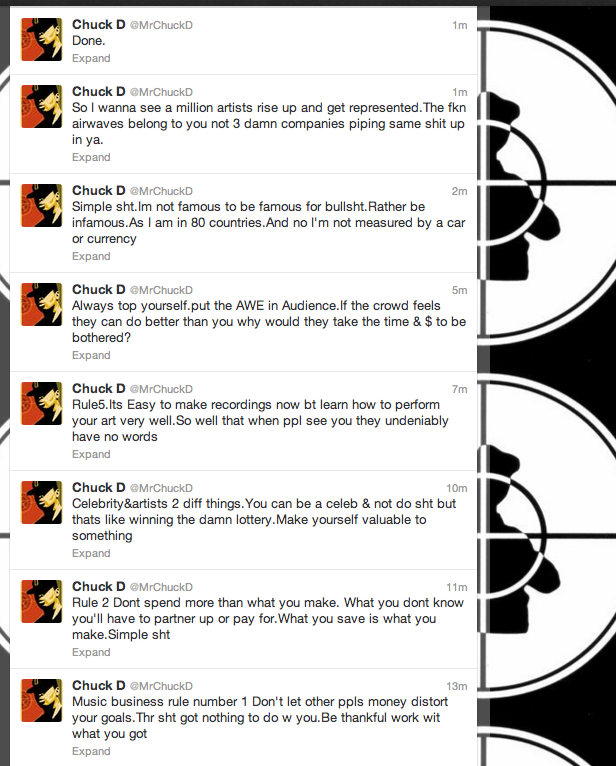
I thought Lowery’s piece was so badly flawed, with its conspiracy theories and sloppy appeals to emotion, that it didn’t warrant a response. But others didn’t feel the same way. Techdirt’s Mike Masnick has posted a guided tour of the best rebuttals, including Jeff Price from Tunecore on the real data on musicians’ income in the Internet age; Steve Albini on the false picture Lowery paints of a golden age of the labels that never existed; Jonathan Coulton on the perversity of mourning for a loss of scarcity; former Warner Music CTO Ethan Kaplan on how the labels cut their own throats by fighting innovation; Travis Morrison from Dismemberment Plan on how access to music and compensation for artists are separate issues. Taken together, it’s a series of bracing reads and a strong tonic. Here’s some of Tunecore’s Jeff Price:


Previously, artists were not rolling in money. Most were not allowed into the system by the gatekeepers. Of those that were allowed on the major labels, over 98% of them failed. Yes, 98%
.

Of the 2% that succeeded, less than a half percent of those ever got paid a band royalty from the sale of recorded music.

How in the world is an artist making at least something, no matter how small, worse than 99% of the world’s unsigned artists making nothing and of the 1% signed, less than a half a percent of them ever making a single band royalty ever?

Finally, as much as I hate to say it, being an artist does not entitle the artist to get money. They have to earn it. And not everyone can…

Revenue to labels has collapsed. Revenue to artists has gone up with more artists making more money now than at any time in history, off of the sale of pre-recorded music.

Taken a step further, a $17.98 list price CD earned a band $1.40 as a band royalty that they only got if they were recouped (over 99% of bands never recouped).

If an artist sells just two songs for $0.99 on iTunes via TuneCore, they gross $1.40.

If they sell an album for $9.99 on iTunes via TuneCore, they gross $7.00.

This is an INCREASE of over 700% in revenue to artists for recorded music sales.

Some Facts & Insights Into The Whole Discussion Of ‘Ethics’ And Music Business Models